On USB-C Port
USB-C has become the port of choice for modern mobile devices, powering almost all of my gadgets—except for my trusty 2017 iPad Pro 10.5-inch, which still holds its ground with Apple’s proprietary Lightning port.
Recently, I’ve noticed that the USB-C port on my OnePlus 6 is showing signs of wear and tear. The connection feels loose, and the port seems to have accumulated dust over time. This has led to issues with charging and connecting peripherals. Interestingly, my 2017 iPad Pro’s Lightning port, despite enduring similar levels of abuse, continues to function flawlessly. This discrepancy got me thinking about the physical design of USB-C versus Lightning ports.
While USB-C is undeniably superior in terms of versatility and performance, I believe the physical design of the Lightning port has some advantages worth discussing.
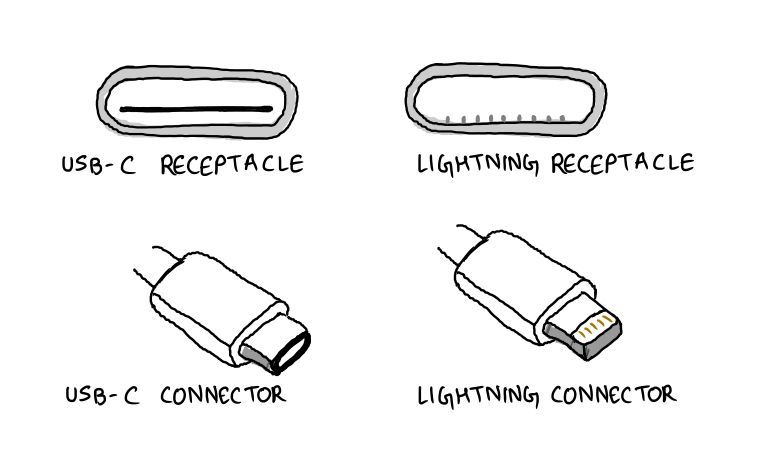
Observations: USB-C vs Lightning
- Dust and Debris Management
- Lightning Port: Apple’s Lightning connector is remarkably easy to clean. Dust and debris rarely cause significant issues, and when they do, a simple wipe or a quick poke with a toothpick usually resolves the problem.
- USB-C Port: The open design of USB-C makes it more susceptible to dust accumulation. Dust can settle on the outer surface, which is manageable, but the real challenge lies in the inner cavity. The thin central plate inside the USB-C port is particularly vulnerable to debris, and cleaning it without damaging the port can be a nightmare.
Receptacle Port Design Both Lightning and USB-C ports are open by design, but USB-C’s thin internal plate adds a layer of fragility. This plate is essential for the port’s functionality, but it also makes the port harder to clean and more prone to physical damage over time.
- Durability Over Time Anecdotally, Lightning ports seem to withstand wear and tear better than USB-C ports. This could be attributed to the simpler design of the Lightning connector, which lacks the delicate internal components of USB-C.
What’s Missing: The Locking Mechanism
One area I haven’t explored deeply is the locking mechanism of these ports. The “click” you feel when plugging in a cable is a critical aspect of the user experience and port longevity. While I lack detailed knowledge of the engineering behind these mechanisms, it’s worth noting that USB-C’s locking mechanism can weaken over time, leading to loose connections. Lightning ports, on the other hand, seem to maintain their grip better, at least in my experience.
Beyond the Physical: The Capabilities of USB-C
Despite its physical design challenges, USB-C is a technological marvel. It supports high-speed data transfer, video output, and power delivery—all in a compact form factor. Thunderbolt 3 and 4, which use the USB-C connector, take these capabilities even further, enabling features like daisy-chaining multiple devices and driving high-resolution displays.
In contrast, the Lightning port feels outdated. It lacks the versatility and power of USB-C, and its proprietary nature limits its adoption outside the Apple ecosystem. However, Apple’s control over the Lightning standard ensures a level of consistency and reliability that USB-C, with its myriad implementations, sometimes struggles to match.
The Bigger Picture: USB-C as the Universal Standard
USB-C is clearly the future. Its adoption as a universal standard is a win for consumers, reducing the need for multiple cables and adapters.
That said, I wish the designers of USB-C had paid more attention to longevity and durability. The Lightning port, while technologically inferior, excels in these areas. Perhaps future iterations of USB-C can incorporate lessons from Lightning’s robust design.
Conclusion
The USB-C port is a testament to progress in technology - compact, powerful, and versatile. Yet, its physical design leaves room for improvement, particularly in terms of durability and ease of maintenance. As we move toward a USB-C-dominated world, I hope the next generation of connectors strikes a better balance between functionality and longevity.
For now, I’ll keep a can of compressed air handy for my USB-C ports and marvel at how my aging Lightning port continues to defy the odds.